

2D and 3D Layouts
2D and 3D layouts are fundamental tools in interior design that allow you to see and plan your space accurately before any physical work begins. A 2D layout offers a flat, top-down view of the room, showing walls, doors, and furniture placement with exact dimensions for clarity and measurement. The 3D layout adds depth and realistic perspectives, helping you understand how the space will look and feel in real life, including furniture scale, color schemes, textures, and lighting. Utilizing both types of layouts ensures better communication between designers, clients, and contractors, reduces costly errors, and helps make well-informed design decisions that bring your vision to life flawlessly.
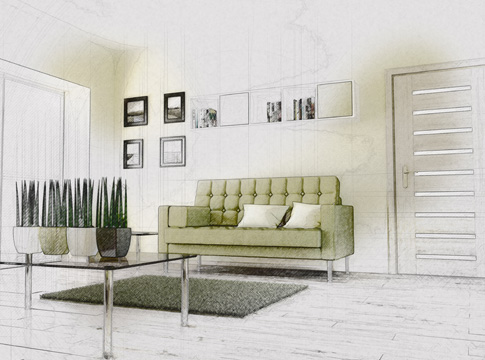

Experience your future home or office through immersive digital models, allowing for easy adjustments and informed decision-making. Interactive previews help visualize furniture placement, lighting effects, and overall ambiance before any physical changes are made.
3D modeling
Room Measurement
2d planning
Frequently asked questions
Find answers to the most common questions and helpful information about our services below.
3D design is the process of creating three-dimensional digital models of objects or environments using specialized software. It involves shaping, texturing, and rendering models to produce realistic or conceptual visuals that can be used in various industries like manufacturing, gaming, architecture, and entertainment.
The cost of interior design varies widely based on several factors including the size of the space, the complexity of the design, the materials and furnishings chosen, and the location. Interior designers may charge through different pricing models such as a flat fee, hourly rate, or a percentage of the total project cost. Additional expenses may include furniture, fixtures, decor, labor, and permits if required.
The time spent on planning an interior design project depends on its size, complexity, and your decision-making process. Typically, planning can take anywhere from a few weeks to several months. For smaller projects like a single room, planning may take 2 to 4 weeks, while larger projects such as an entire home or commercial space can take several months.
The time spent on planning an interior design project depends on its size, complexity, and your decision-making process. Typically, planning can take anywhere from a few weeks to several months. For smaller projects like a single room, planning may take 2 to 4 weeks, while larger projects such as an entire home or commercial space can take several months.